Encyclopaedia Judaica
Jews in Morocco 01: Legends and Jewish mission
Gold market legend and other legends - tombstones - Jewish mission and Judaized Berber tribes
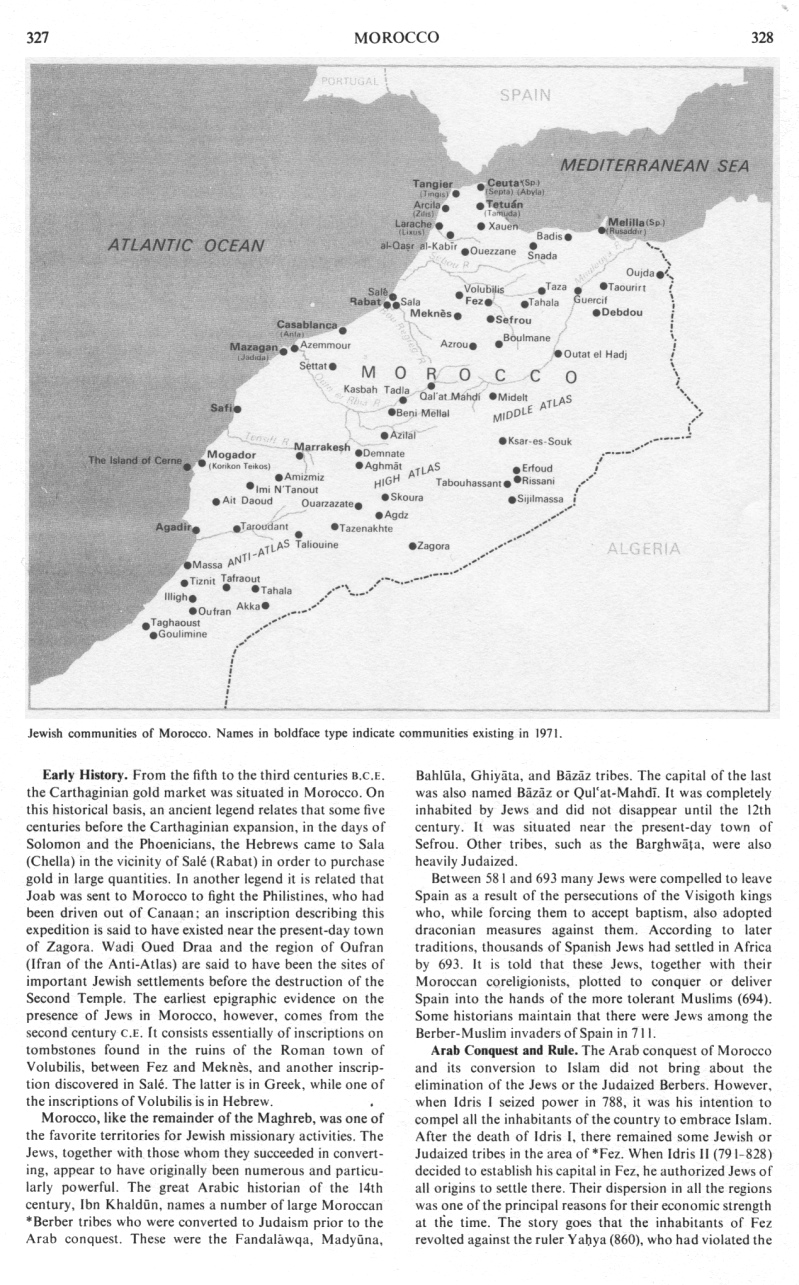
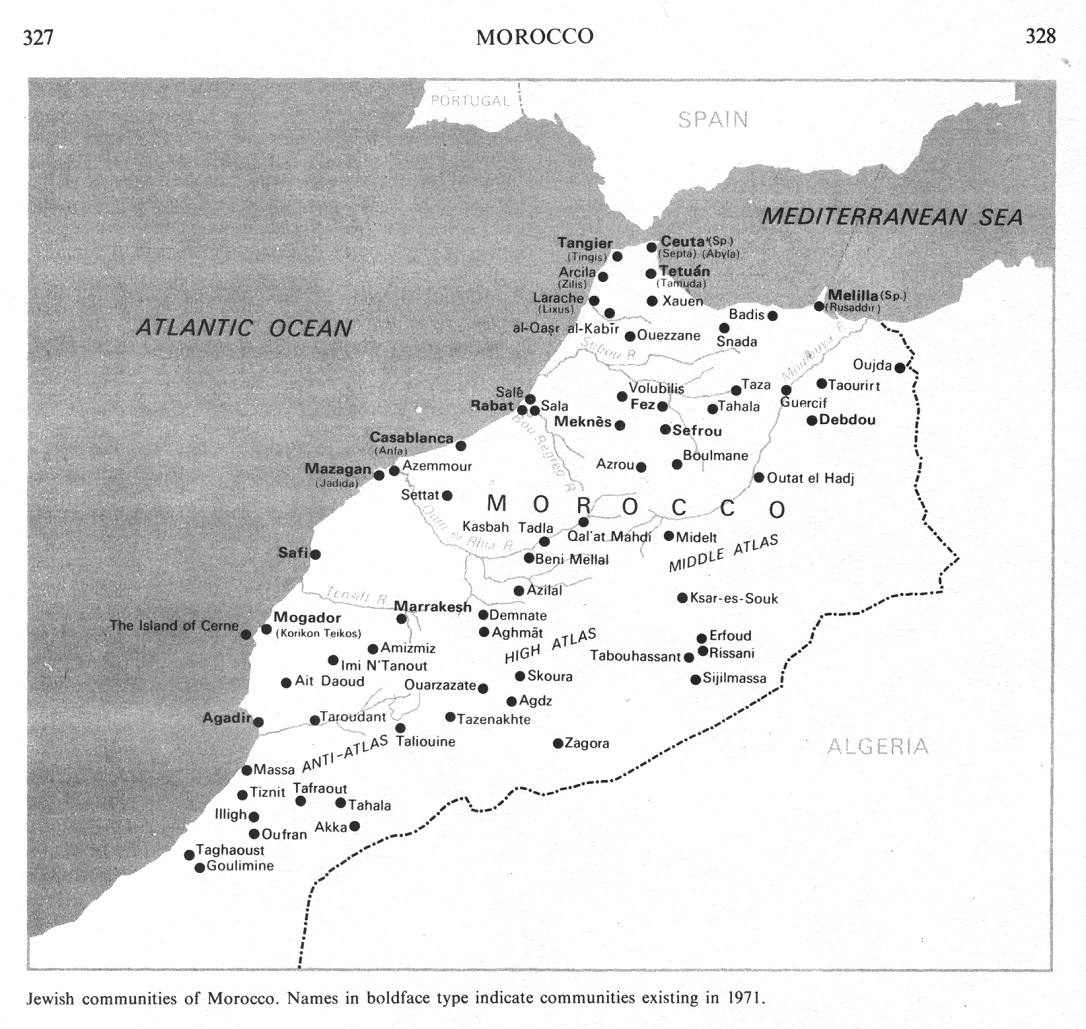
Encyclopaedia Judaica: Jews in Morocco, vol.12, col. 327-328, map of Jewish communities in Morocco
(in slim letters not existing any more, in boldface type existing in 1971)
from: Morocco; In: Encyclopaedia Judaica 1971, vol. 12
presented by Michael Palomino (2008)


| Share: |
Facebook |
|
Twitter
|
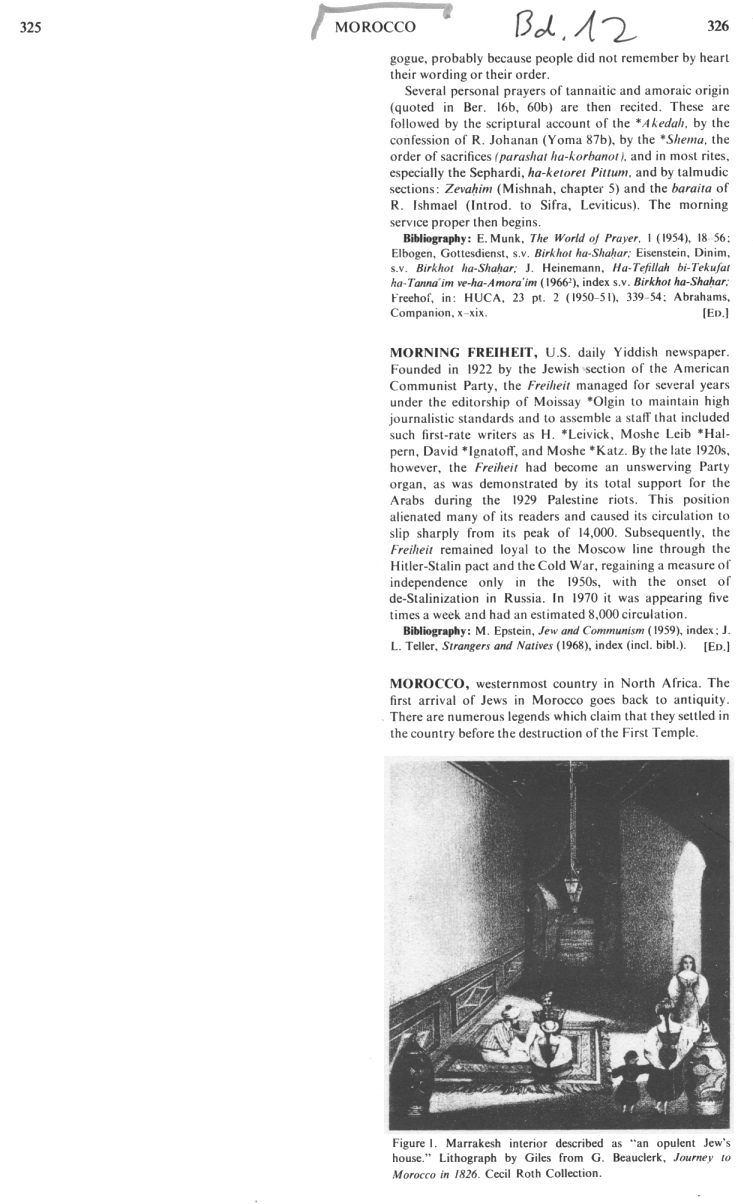
<MOROCCO, westernmost country in North Africa.
The first arrival of Jews in Morocco goes back to antiquity. There are numerous legends which claim that they settled in the country before the destruction of the First Temple. (col. 326)
[[According to new Jewish archeology the First Temple never existed, see: Silberman / Finkelstein: The Bible Unearthed]].
Early History.
[Carthaginian gold market in Morocco - the gold legend - and other legends about the first Jews]
From the fifth to the third centuries B.C.E. the Carthaginian gold market was situated in Morocco. On this historical basis, an ancient legend relates that some five centuries before the Carthaginian expansion, in the days of Solomon and the Phoenicians, the Hebrews came to Sala (Chella) in the vicinity of Salé (Rabat) in order to purchase gold in large quantities.
In another legend it is related that Joab was sent to Morocco to fight the Philistines, who had been driven out of Canaan; an inscription describing this expedition is said to have existed near the present-day town of Zagora. Wadi Oued Draa and the region of Oufran (Ifran of the Anti-Atlas) are said to have been the sites of important Jewish settlements before the destruction of the Second Temple.
[[According to Jewish archeology this temple was the only one, see: Silberman / Finkelstein]].
[2d century: Jewish tombstones in Greek and in Hebrew]
The earliest epigraphic evidence on the presence of Jews in Morocco, however, comes from the second century C.E. It consists essentially of inscriptions on tombstones found in the ruins of the Roman town of Volubilis, between Fez and Meknès, and another inscription discovered in Salé. The latter is in Greek, while one of the inscriptions of Volubilis in in Hebrew.
[Jewish missionary activities - converting tribes to Judaism: Judaized Berbers - Jewish town Bazaz]
Morocco, like the remainder of the Maghreb, was one of the favorite territories for Jewish missionary activities. The Jews, together with those whom they succeeded in converting, appear to have originally been numerous and particularly powerful. The great Arabic historian of the 14th century, Ibn Khaldun, names a number of large Moroccan *Berber tribes who were converted to Judaism prior to the Arab conquest.
These were the Fandalawqa, Madyuna, (col. 327)
Bahlula, Ghiyata, and Bazaz tribes. The capital of the last was also named Bazaz or Qul'at-Mahdi. It was completely inhabited by Jews and did not disappear until the 12th century. It was situated near the present-day town of Sefrou. Other tribes, such as the Barghwata, were also heavily Judaized.> (col. 328)
Sources
Encyclopaedia Judaica 1971: Morocco, vol. 12, col. 326
Encyclopaedia Judaica 1971: Morocco, vol. 12, col. 327-328